
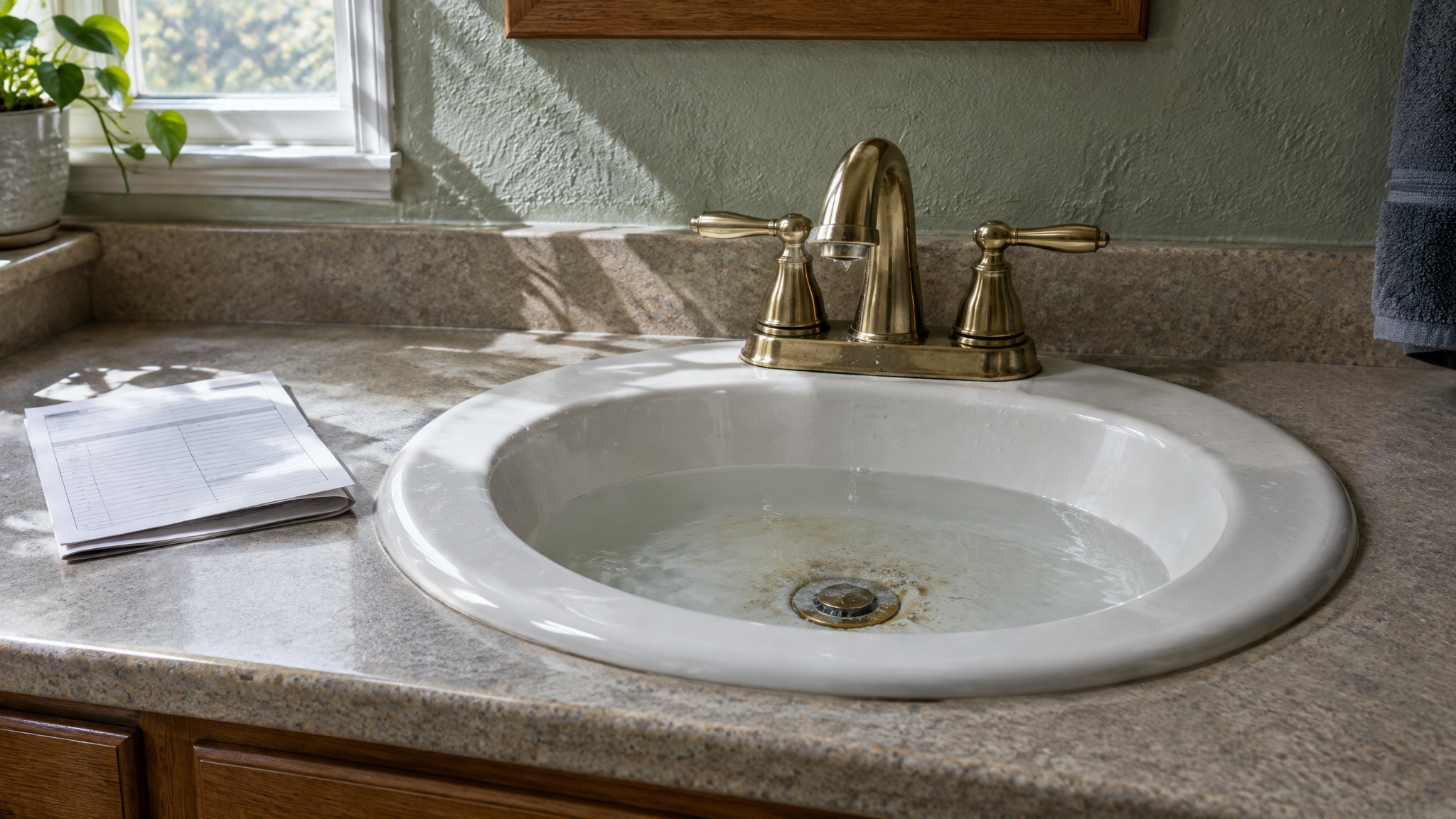
How Long Does a Landlord Have to Fix Habitability Issues in California?
We explain how long a landlord has to fix habitability issues in California. Our team details repair timelines and tenant rights for 2026.
If a tenant reports a leak, a dead furnace or a broken stair railing, the next question is always the same: how many days does the landlord get? Owners want to know what they can plan around, and tenants want to know when waiting turns into a problem.
We manage rental properties across Contra Costa, Alameda, Stanislaus and San Joaquin counties, and we answer this question often. Below, we explain what California law says about how long a landlord has to fix habitability issues, where the common "30 days" figure comes from, and what each side can do when a repair drags on. This is general information, not legal advice.
The short answer: California uses a reasonable-time standard, not a fixed deadline
California does not set a number of days for most habitability repairs. Civil Code sections 1941 and 1941.1 require a landlord to keep a unit fit to live in, and the law asks whether the landlord acted within a reasonable time after learning of the problem.
Four things move that answer: how serious the problem is, how much risk it creates for the people living there, whether the tenant gave access, and whether parts or contractors were available. A gas odor and a slow-draining bathroom sink are both repair requests, but they do not run on the same clock.
For you as an owner, that means "reasonable" is judged by what you did, not by what you meant to do. Quick acknowledgment, a scheduled visit and a paper trail all count in your favor.
The statute text can change, so we check the current wording of these sections before we advise on any specific dispute.
Which repair problems count as habitability issues
Section 1941.1 lists the features a rental must have to be considered livable. A unit that substantially lacks any of them is a habitability problem:
- A weather-tight roof and exterior walls, with unbroken windows and doors
- Plumbing in working order, including hot and cold running water
- Heating facilities in good working order
- Electrical lighting and wiring in good working order
- A building and grounds kept clean and free of debris, rodents and vermin
- An adequate number of garbage receptacles in clean condition
- Floors, stairways and railings in good repair
You can read the full list on the state's Civil Code section 1941.1 page.
Cosmetic defects generally sit outside this standard. Worn paint, a scuffed baseboard or a sticky cabinet door may be fair maintenance requests, but they are not habitability violations. Appliances carry their own rules, which we cover in our guide to habitability and appliance compliance for landlords.
How quickly a landlord must fix habitability issues, by urgency
Because the law uses a reasonable-time test, the practical question is how urgent the problem is. We sort every request into one of two groups the day it arrives.
Emergencies that need same-day action
Some conditions threaten health or safety right now. These call for same-day action:
- No heat in cold weather
- No running water
- Sewage backing up
- A gas odor
- Exposed live wiring
Same-day action does not always mean same-day completion. If a full repair needs a part or a licensed trade, the landlord should put a temporary measure in place, such as a space heater where permitted, bottled water or a shutoff, and keep the permanent fix moving. Some city and county codes set tighter windows than the general standard, so check the local rules for the property.
A gas odor is a call to the utility and emergency services first, and a repair ticket second.
Non-emergency repairs and the reasonable-time test
A loose stair railing, a contained pest problem or a failing window latch is serious, but nobody is in immediate danger. Here, a court looks at severity, how long parts and contractors realistically take, and whether the landlord moved promptly once notified.
Many guides cite 30 days. That figure is a useful benchmark, and courts and housing inspectors often treat it as a reference point, but it is not a statutory deadline. A simple fix left for three weeks can still be unreasonable, while a complicated repair with a documented parts delay can run longer and still be fine.
Equipment replacements can add time in some places. In the Bay Area, air district rules may affect which water heater or furnace you can install, and we explain them in our overview of Bay Area gas-to-electric rules for rentals. If a replacement needs extra steps, tell the tenant in writing and give a target date.
This standard does not protect a landlord who simply waits. It also gives tenants no right to demand a specific completion date for a non-emergency repair.
When the repair clock starts, and how access affects it
The clock generally starts when the landlord has notice of the problem. A tenant who mentions a leak in passing and a tenant who sends a dated email with photos may both have given notice, but only one of them can prove it.
Written notice, dated records, and entry rules
A dated written request with photos gives both sides a clear record. Tenants, send it by email or text so you have a timestamp. Owners, log it the day it comes in, because that date anchors everything that follows.
Access matters too. Under Civil Code section 1954, 24 hours' written notice is presumptively reasonable before a landlord enters for non-emergency repairs. In a true emergency, such as a burst pipe, entry without that notice is allowed.
If a tenant misses agreed appointments or turns away a contractor, the reasonable-time analysis shifts. The same goes for damage the tenant caused. Time lost to refused access generally should not count against the landlord, which is another reason to keep records of every attempted visit.
What happens when a landlord misses the repair window
When repairs run well past a reasonable time, California gives tenants several remedies. Each has conditions, and tenants who skip them can end up worse off.
Repair and deduct, and its limits
Civil Code section 1942 lets a tenant fix a problem and deduct the cost from rent, but only for conditions that make the unit untenantable. The limits are tight:
- The tenant must give the landlord written notice first.
- The tenant must wait a reasonable time for the landlord to act.
- The cost cannot exceed one month's rent.
- The remedy can be used no more than twice in any 12-month period.
This is not a way to cover a kitchen remodel or a cosmetic fix, and it is not a shortcut around the notice step. A tenant who deducts without meeting these conditions risks a nonpayment claim.
Code complaints and the 35-day rent bar
A tenant can also call the city or county code enforcement office. If an inspector finds substantial violations and the landlord still has not repaired them more than 35 days after notice, section 1942.4 can bar the landlord from demanding or collecting rent for that period. The conditions must not have been caused by the tenant. You can read the text of section 1942.4 on the state's site.
Inspection practice varies by city and county across the four counties we serve. Response times, the way notices are issued and how follow-up happens are not uniform, so an owner in Stockton may see a different process than one in Oakland.
Tenants can also ask a court for a rent reduction or damages for the period a unit was substandard. Moving out is a last resort for severe cases, because it ends the tenancy and does not by itself recover anything.
Common myths about landlord repair deadlines in California
Four misunderstandings come up again and again, and they cause trouble for owners and tenants alike.
Myth: California sets a 30-day legal deadline. The governing rule is the reasonable-time standard. Thirty days is a benchmark, and an emergency may need action in hours.
Myth: Tenants can withhold rent whenever a repair runs late. California has no general right to stop paying rent. The statutory remedies, repair and deduct and the 35-day rent bar, have specific conditions. Withholding rent is a high-risk step, and a tenant who considers it should get legal advice first.
Myth: A lease clause can waive habitability rights. It cannot. The warranty of habitability is part of every residential lease, and a clause saying otherwise does not hold up.
Myth: A rent increase or eviction soon after a repair request is safe. Under Civil Code section 1942.5, a rent increase, service cut or eviction notice within 180 days of a tenant's repair request or complaint can be presumed retaliatory. Owners should have a documented, unrelated reason before acting in that window, and our guide to the statewide rent cap and eviction rules covers the related limits.
A repair response plan landlords can actually follow
Most repair disputes we see do not start with a refusal. They start with a message that sat unanswered for a week. A simple, repeatable workflow keeps small problems from becoming legal ones, and it works whether you own one unit or twenty.
- Day 0: the request is logged with the date and time received.
- Same day: it is sorted as an emergency or non-emergency.
- Within a day or so: the tenant gets a written acknowledgment with a target date.
- Every step: photos and vendor invoices are saved to the file.
Documenting every request from first report to closure
Build one record per request. It should show the original message, the category you assigned, each contact attempt, the access dates offered, the vendor's scheduling notes and the final invoice. Add before-and-after photos.
If a dispute ever reaches a code officer or a judge, that file shows what happened, when, and why a delay occurred. It protects tenants too, because it shows the work was finished.
We've coordinated maintenance for rental owners in Contra Costa, Alameda, Stanislaus and San Joaquin counties for over two decades, and our team can run this workflow for owners who want a hands-off setup. If that sounds useful, our maintenance coordination services page explains what we handle. If you are still comparing options, we also wrote about how to choose a property manager.
North State Financial is a California DRE-licensed property management company, and we're glad to talk through how our approach handles repair timelines. This article is general information, not legal advice, so talk to an attorney about a specific dispute.
Frequently asked questions
Is 30 days the legal deadline for a landlord to make repairs in California?
No. California applies a reasonable-time standard, and 30 days is a benchmark that many guides and inspectors use. Emergencies need action much sooner, and a complicated non-emergency repair with a documented parts delay may take longer and still be reasonable.
Can a tenant stop paying rent if repairs aren't made?
Not as a general right. The statutory options have conditions, such as written notice, a reasonable wait and the cost cap for repair and deduct, or the 35-day rule for serious violations. Withholding rent without meeting them can lead to a nonpayment claim, so get legal advice first.
How much can a tenant deduct under repair and deduct?
Under Civil Code section 1942, the cost cannot exceed one month's rent. The tenant can use the remedy no more than twice in any 12-month period. It applies only to conditions that make the unit untenantable, and written notice and a reasonable wait come first.
Can a landlord raise rent or start an eviction after a tenant asks for repairs?
It is risky. Under Civil Code section 1942.5, a rent increase, service cut or eviction notice within 180 days of a repair request or complaint can be presumed retaliatory. A landlord needs a documented, unrelated reason and should check with an attorney before acting.
Does a tenant have to let the landlord in to make repairs?
Yes, with proper notice. Civil Code section 1954 treats 24 hours' written notice as presumptively reasonable for non-emergency repair entry, and no notice is needed in a true emergency. If a tenant refuses agreed access, that can extend what counts as a reasonable repair time.
Ready to work with North State Financial?
Professional property management across Contra Costa, Alameda, Stanislaus, and San Joaquin counties.
Get Started Today