
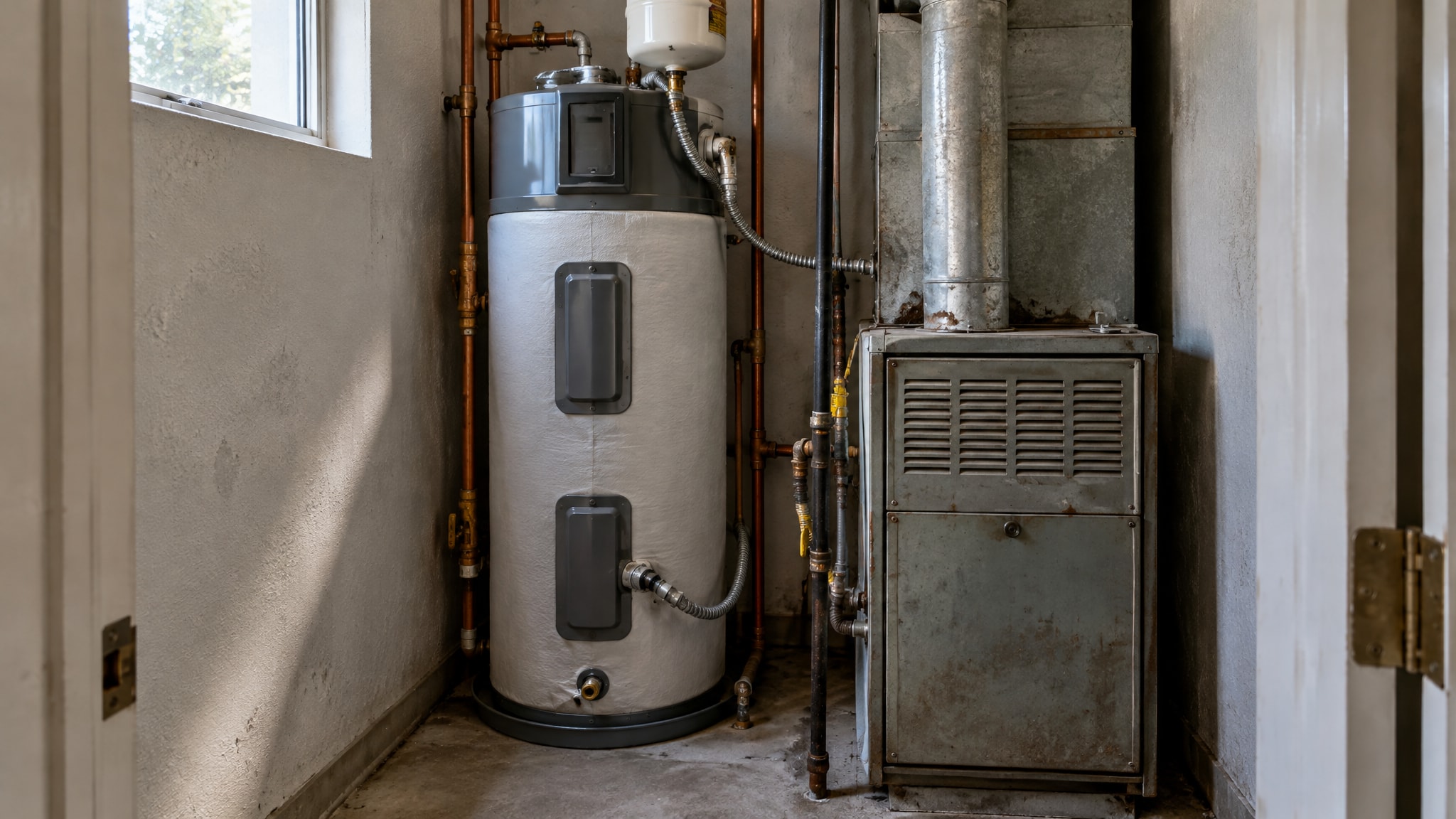
Bay Area Air District Gas-to-Electric Rules for Rentals
We explain Bay Area Air District gas-to-electric rules for rentals. Learn 2027 timelines, costs, and exemptions for Contra Costa and Alameda properties.
If you own rental property in Contra Costa or Alameda County, you have probably heard that the Bay Area is "banning gas appliances." The reality is narrower, and it matters for how you budget and plan. We have managed rentals across Northern California for over two decades, and we want you to know exactly what these rules do and do not require.
The short version: the rules target new equipment at the point of sale and installation. They do not send an inspector to your door to pull out a working water heater.
What the Bay Area Air District Rules Cover for Gas Appliances
The Bay Area Air Quality Management District (the Air District) has adopted rules requiring that new water heaters and furnaces meet a zero-NOx standard, meaning zero emissions of nitrogen oxides, when they are sold and installed, and in practice that points owners toward electric heat pump equipment rather than a new gas unit.
Working equipment is not automatically affected. If your gas water heater or furnace runs fine today, the rules do not require you to replace it.
Gas stoves, ovens, and dryers sit outside these rules. The district's rules for residential equipment address water heaters and furnaces, so a rental with a gas range or a gas dryer is not touched by them.
This article does not cover local ordinances that individual cities may adopt separately. Those are a different question, and your building department can tell you where your city stands.
Which of Our Counties Fall Under the Bay Area Rules
We serve four counties, and the answer splits them in half.
Contra Costa and Alameda properties sit inside the Air District's boundary. If you own there, these rules apply to you. Our Contra Costa County property management guide and our guide to Alameda County property management cover the wider local picture for owners in each county.
Stanislaus and San Joaquin properties fall under a different regional air district, so the Bay Area rules do not govern equipment sales there. If you hold San Joaquin County rentals, your air district may have its own requirements, and you should check with it directly.
County lines are not always the whole story for a specific address. Before you rely on any of this, check your property against the Air District's own boundary map.
How the Gas-to-Electric Phase-In Schedule Works
The rules do not switch on all at once. They phase in by appliance type, with water heaters first.
One caution before the dates. The district has proposed amendments that would loosen parts of the water heater rule, so what follows is the adopted schedule, and it is under review.
Zero-NOx Water Heater Sales Are Scheduled to Begin in 2028
Under rules adopted in 2023, only zero-nitrogen oxide water heaters would be sold starting in 2028. Which is close enough that any owner with an aging gas water heater should be thinking about it now.
The word "sold" is doing the work here. Gas water heaters already installed are not removed under this schedule. What changes is what a supplier or installer can sell you when yours needs replacing.
Furnaces Follow in 2029 and Large Commercial Units in 2031
The district's own factsheet sets the phase-in by appliance: from 2029 only zero-NOx furnaces can be sold or installed in the Bay Area, and from 2031 only zero-NOx large commercial water heaters can be.
For most of our owners, the 2029 furnace date is the one to note. The 2031 date applies to large commercial water heaters, which a small residential rental rarely has. Owners of larger multifamily buildings should ask whether their central equipment falls in that category.
We have not independently confirmed that every date above survives the amendment process. Treat them as the schedule on the books, and check before you commit money to a timeline.
What the Rules Mean When a Gas Water Heater or Furnace Fails
For a rental, the rules come into play at one moment: when a gas water heater or furnace has to be replaced. Nothing is required while the unit keeps working.
The Rules Apply at Replacement, Not Before
A working gas unit can stay where it is until it fails or you choose to swap it. That sounds like good news, and it is, but it hides a trap.
Water heaters rarely fail on a convenient schedule. They fail on a Sunday, with a tenant standing in a cold shower, and you then have to buy equipment under whatever rules apply that day. Owners often meet the rules on short notice, and a plan made before the failure is the real safeguard.
A workable plan is simple:
- Note the age and install date of each water heater and furnace across your units.
- Get a rough electrical and space assessment while nothing is broken.
- Decide in advance who authorizes the spend and how fast.
If you manage several units yourself, a short equipment list pays for itself the first time something breaks. We keep this kind of record for the owners we work with, because a decision made calmly costs less than one made during an outage.
Keeping Tenants Informed During a Swap
California habitability standards expect a rental to have working hot water and heating. A failed unit is not a cosmetic problem, and a heat pump installation that drags on is still a period without service for your tenant.
Plan the work so the gap is short, and tell the tenant what is happening and when. Tenant-notice requirements depend on the type of work, whether it needs entry, and what your lease says. Confirm them with your counsel or with our team before any work starts, not after the installer has booked a date.
This is also where the 2026 California rent law changes belong on the same calendar. Appliance work and tenant notices tend to overlap with other compliance deadlines, and it is easier to handle them together.
Replacement Costs and Exemptions Under the Proposal
Cost is the question we hear first, so here is what we can say without guessing. Two figures matter, and both come with caveats.
What the $3,500 Estimate Means for Your Budget
The district estimates it would cost about $3,500 more to install an electric heat pump water heater than a natural gas model. That is an estimate, not a quote. Your actual number depends on the unit, the installer, and what the installation uncovers.
Incentive programs can change the net cost, sometimes by a meaningful amount. We are not going to quote a specific rebate here, because programs open, close, and change terms, and a figure we printed today could be wrong by the time you read it.
If you are budgeting, add the $3,500 premium as a starting point and then add a contingency for electrical work. A panel that cannot carry the new load turns a simple swap into a larger job, and that is the part no estimate can tell you in advance.
Regulators estimate up to 38% of homeowners could qualify for exemptions under the proposal. Read that carefully, because it is easy to over-read.
It is a proposal, not adopted law. The figure refers to homeowners, not rental owners. Any single rental qualifies only under the criteria that are finally adopted. We would not plan around an exemption you cannot yet point to in the final text, and this article is not a promise that your property will or will not qualify.
A Practical Replacement Checklist for Rental Owners
Here is the process we follow when a gas unit fails in a covered area. Use it as a working list, and adjust it for your property.
Before the Installation: Permits, Power, and Space
- Coverage: confirm the property is inside the Air District boundary and which rules apply to the equipment being replaced.
- Permits: ask your local building department what the permit path is for the swap.
- Electrical: ask the installer whether the panel needs changes to carry a heat pump.
- Clearance and airflow: have the installer check the space around a heat pump unit, since it needs room that a gas tank did not.
- Tenant notice: tell the tenant what work is planned, when, and whether anyone needs to be home.
Your installer should answer the electrical and clearance questions in writing. If a bid does not mention them, the price may change once the crew arrives.
After the Installation: Records and Follow-Up
- Invoices: keep the installer's invoice and any permit sign-off in the property file.
- Equipment records: note the make, model, install date, and warranty terms for the new unit.
- Tenant briefing: show the tenant how the new unit works and who to call if something seems off.
- Follow-up: check in after a week or two to confirm hot water and heat are steady.
These records matter later. They support your depreciation and repair history, and they answer questions from a future buyer or a future property manager.
Owners who want a hands-off process can hand off the coordination through our maintenance coordination services. We line up the installer, track permits, and keep the tenant informed, so you do not have to chase any of it yourself.
Where to Confirm Requirements Before You Act
We are a licensed California DRE property management company, not the agency that writes these rules. For current requirements, go to the source: the Air District's appliance pages and your local building department.
Dates and exemptions can shift while amendments are under review. If you read something that differs from this article, trust the district's current published text over ours, and tell us so we can update what we tell owners.
If you want to talk through a specific property, whether it is one unit in Concord or a small portfolio across Alameda County, contact our team. We will look at the equipment, the county, and your timeline, and give you a straight answer on what to do next.
Frequently asked questions
Do I have to replace my working gas water heater or furnace?
No. The rules apply to new equipment at sale and installation, so a working gas water heater or furnace can stay in place until it fails or you decide to swap it. They also do not cover gas stoves, ovens, or dryers.
When do zero-NOx water heaters and furnaces become the only option?
Under the rules adopted in 2023, only zero-NOx water heaters are scheduled to be sold starting in 2027. Furnaces follow in 2029 and large commercial water heaters in 2031. The district has proposed amendments that could change those dates, so confirm them before you plan around them.
Do the Bay Area rules apply to my San Joaquin or Stanislaus County rental?
No. Contra Costa and Alameda properties sit inside the Bay Area district's boundary. Stanislaus and San Joaquin properties fall under a different regional air district, which may have its own requirements, so check with that district.
How much more will a heat pump water heater cost than a gas one?
The district estimates about $3,500 more to install an electric heat pump water heater than a natural gas model. That is an estimate, not a quote. Electrical work, the installer, and any incentive programs can move your actual cost up or down.
Will my rental qualify for an exemption?
We can't say yet. Regulators estimate up to 38% of homeowners could qualify under the proposal, but that figure is for homeowners and the proposal is not final. A single rental qualifies only under the criteria that are finally adopted.
Ready to work with North State Financial?
Professional property management across Contra Costa, Alameda, Stanislaus, and San Joaquin counties.
Get Started Today