
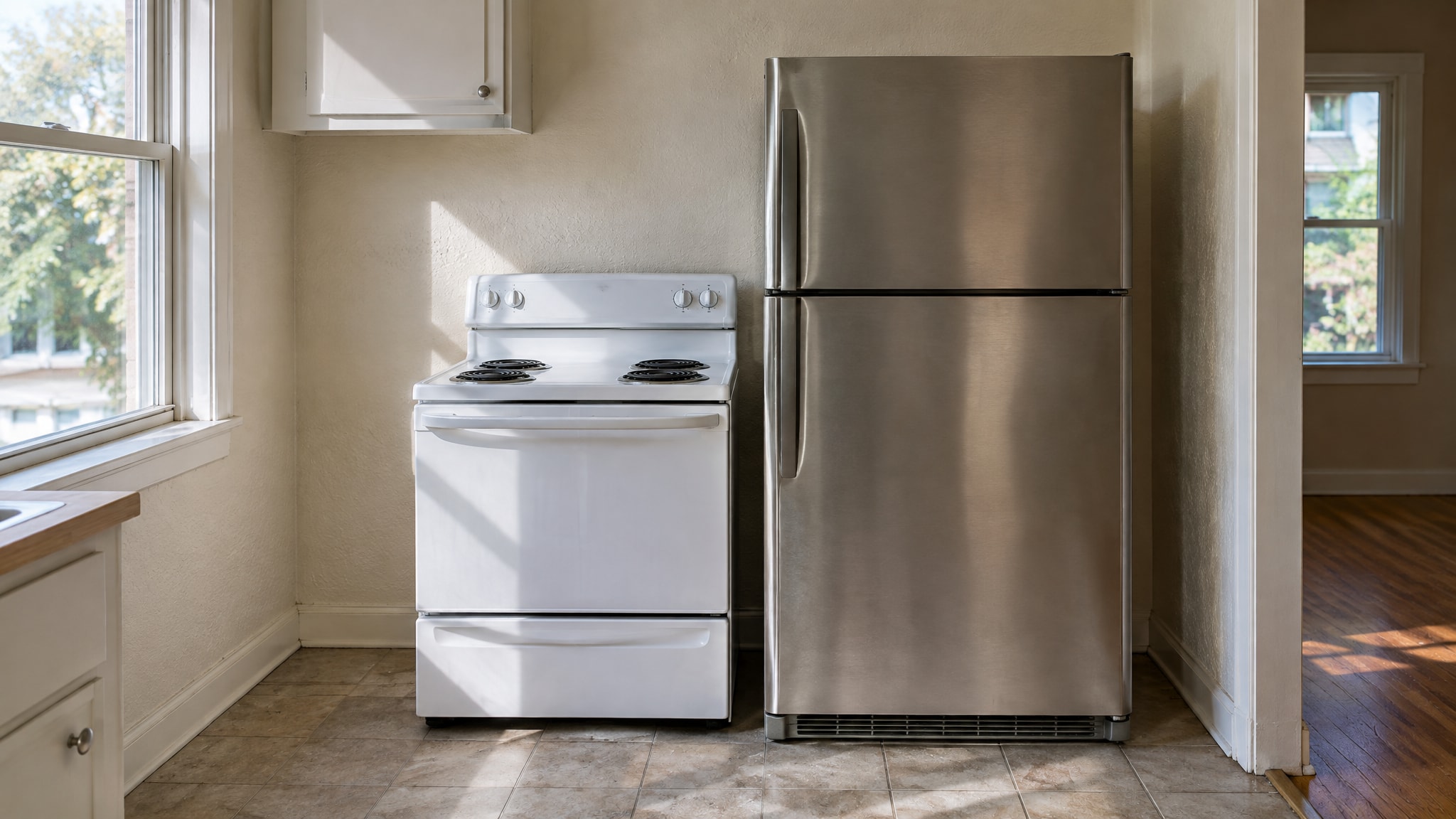
Habitability and Appliances: AB 628 Compliance for Landlords
AB 628 links habitability and appliances in California rentals. We explain stove and fridge mandates, repair timelines, and compliance strategies.
California rental law has long required landlords to maintain safe and sanitary housing. Now the definition of habitability explicitly includes major kitchen appliances. AB 628 amends Civil Code §1941.1 to establish that a working stove and refrigerator are baseline necessities for residential tenancies, not optional amenities. This changes how you prepare units, respond to maintenance requests, and document appliance conditions across your portfolio in Northern California.
The mandate matters because it ties appliance functionality directly to tenant remedies and legal liability. We've managed rentals in Contra Costa, Alameda, Stanislaus, and San Joaquin counties for over two decades, and we see how fast regulatory gaps turn into costly disputes when landlords rely on outdated assumptions about what makes a unit habitable.
What AB 628 Requires for Rental Habitability
The law removes any ambiguity about whether landlords must provide cooking and food storage equipment. Cooking and refrigeration are now essential components of a habitable dwelling, by statute. You can no longer treat a broken refrigerator or dead stove as a convenience issue that waits for the next turnover. These are now urgent habitability defects requiring immediate attention under state law. The standard applies to leases entered into, amended, or extended on or after January 1, 2026. The trigger is contractual activity, not the age of the building or the original move-in date.
Stove and Refrigerator as Mandatory Amenities
AB 628 took effect on January 1, 2026, making stoves and refrigerators mandatory habitability items for covered leases. The statute requires both appliances to stay in good working order throughout the tenancy, whether the landlord originally provided them or a previous owner installed them. A unit lacking either appliance at the start of a covered lease term fails the minimum habitability threshold. That can expose you to rent abatement claims before a tenant even moves in.
The requirement goes beyond mere presence. A refrigerator that runs but can't hold safe food temperatures, or a stove where several burners won't ignite, doesn't satisfy the statute, even though the appliance is technically there.
Leases Affected by the 2026 Appliance Mandate
The key trigger for AB 628 is lease activity, not occupancy date, so even long-term tenants become covered once their agreement is amended or extended. A landlord in Alameda County who renewed a lease in February 2026 became immediately subject to AB 628 appliance requirements, even though the unit had been occupied since 2020. You can't grandfather existing month-to-month tenancies indefinitely. Any future lease modification brings those units under the new appliance standards.
New tenancies signed today are automatically covered. But you should also audit your current month-to-month agreements to see which ones might trigger compliance through routine administrative updates. Even a minor change to payment terms or house rules can count as an amendment that activates the mandate, so review every document exchange carefully.
Landlord Repair and Replacement Obligations
Once a unit falls under AB 628, your duty to maintain appliances comes with specific timelines and documentation expectations beyond general repair obligations. Miss the standard and a mechanical failure becomes a legal breach, so your response protocols need to be as precise as the statute itself. Many landlords get caught off guard here, particularly when sorting out routine maintenance failures from damage tenants caused themselves.
Timelines for Fixing Recalled Appliances
State law gives you thirty days to repair or replace a recalled stove or refrigerator once you receive notice of the recall. The clock starts when the manufacturer or regulatory agency issues the recall notice, not when you personally inspect the unit or confirm the defect. Sourcing compliant replacements inside that window takes established vendor relationships, especially when specific models are backordered during supply disruptions.
Document every communication about the recall. That record protects you if a tenant later claims you missed the statutory deadline. Keep copies of recall notices, purchase orders for replacements, and scheduling confirmations with technicians.
Distinguishing Normal Wear from Tenant Damage
AB 628 doesn't let tenants off the hook for damage caused by negligence or misuse, but the burden of proof falls entirely on your documentation. Without a detailed move-in inspection report noting the exact condition of each appliance, you'll struggle to deduct repair costs from a security deposit or defend against a habitability claim. Photos of pre-existing scratches, dented doors, or burner wear give you objective evidence that separates normal deterioration from tenant-caused harm.
We recommend appliance-specific inspections at every turnover, with operational status documented alongside cosmetic condition. Testing all burners, checking oven temperature accuracy, and inspecting refrigerator seals takes a few minutes and heads off expensive disputes months later, when a tenant reports a problem that actually existed at move-in.
How AB 628 Interacts with Existing Habitability Standards
This law doesn't create a standalone obligation. It folds appliance requirements into California's broader implied warranty of habitability. That matters because tenants can now use existing remedies specifically for appliance failures, which widens your liability beyond simple repair costs. Your compliance strategy has to account for how AB 628 adds to, rather than replaces, the usual habitability enforcement mechanisms.
Overlap with Warranty of Habitability
The implied warranty of habitability already requires landlords to maintain fit premises. AB 628 simply adds appliances to the list of defects that breach that warranty. A broken stove now carries the same legal weight as a leaking roof or faulty wiring when a court decides whether a unit is legally habitable. Courts weighing habitability claims will look at appliance function alongside structural and safety issues, so comprehensive maintenance records matter for defending your overall compliance.
Treat appliance maintenance as part of your other habitability obligations, not a separate category. Folding appliance checks into your regular inspection cycle keeps attention consistent and stops one isolated failure from undermining your broader compliance record.
Tenant Remedies When Appliances Fail
Tenants in covered units can use repair-and-deduct remedies if you fail to fix a broken stove or refrigerator within a reasonable time after notice. That lets a tenant hire their own technician, pay for the repair, and deduct the cost from future rent, up to statutory limits. This remedy already existed for other habitability defects, but AB 628 extends it specifically to appliance failures that landlords used to treat as discretionary upgrades rather than urgent repairs.
Proactive communication heads off most repair-and-deduct situations before they escalate. Acknowledge maintenance requests promptly, give realistic repair timelines, and follow through. That good faith reduces the odds a tenant reaches for self-help remedies.
Compliance Strategies for Northern California Property Owners
Meeting AB 628 takes systematic preparation, not reactive responses to individual complaints. Your approach should reflect the realities of Northern California housing stock, where older buildings often carry aging appliances that may not survive another lease cycle without real investment. Planning ahead protects both your finances and your legal standing.
Pre-Lease Appliance Inspections
A thorough appliance evaluation before signing any lease covered by AB 628 catches potential failures before they become habitability breaches. Build a standardized checklist that tests every function of each appliance, logs serial numbers for recall tracking, and notes remaining useful life based on age and condition. Replacing a twenty-year-old refrigerator proactively costs far less than an emergency replacement mid-lease, plus a possible rent abatement claim on top.
These inspections also feed capital planning, since they reveal which units need appliance budgets set aside ahead of upcoming lease renewals. Tracking appliance ages across your portfolio helps you predict replacement cycles and spread costs over time instead of facing several failures at once.
Updating Lease Language for 2026 and Beyond
We've updated our standard lease addenda across Contra Costa, Alameda, Stanislaus, and San Joaquin counties to reflect AB 628 compliance as of early 2026. Your lease templates should acknowledge the appliance requirement explicitly, while avoiding language that creates warranties beyond the statutory minimum. Specifying that appliances will be maintained "in accordance with Civil Code §1941.1" satisfies disclosure obligations without promising premium performance or unlimited replacements.
Review your entire lease package with qualified legal counsel so base agreements and addenda stay consistent. Contradictory clauses about appliance responsibility create ambiguity, and courts typically resolve that ambiguity against the landlord. Precision in drafting protects you more than vague assurances ever will.
Common Misconceptions About the Appliance Mandate
Confusion about AB 628's scope leads some landlords to overspend on upgrades they don't need, while others underestimate what the law actually requires. Knowing what the law does and doesn't require helps you spend wisely and avoid dangerous compliance gaps. The statute sets a floor for habitability, not a ceiling for modernization.
AB 628 doesn't apply retroactively to leases signed before January 1, 2026, unless those agreements are later amended or extended. Landlords with stable, long-term tenants on unchanged lease terms don't have to install new appliances just because the calendar turned to 2026. But assuming permanent exemption ignores how easily a routine administrative action can trigger coverage, so stay alert even for units that are currently exempt.
The law also doesn't require upgrading a functional older appliance to modern energy-efficiency or aesthetic standards. A working stove from 1995 satisfies the habitability requirement just as fully as a new model, provided it runs safely and reliably. Conflating habitability with modernization leads to capital spending that doesn't actually improve your legal position.
When to Seek Professional Property Management Support
Managing AB 628 compliance across multiple units gets more complex as your portfolio grows and spreads across counties. Individual landlords often find that tracking recalls, coordinating repairs, updating documentation, and watching for legislative changes takes more time than they can reasonably give alongside everything else. Knowing when to bring in professional support protects both your assets and your peace of mind.
Navigating Compliance Across Multiple Units
Standardized protocols stop AB 628 requirements from being applied inconsistently across different properties and tenant situations. Professional management companies run centralized systems for tracking appliance ages, scheduling preventive maintenance, and documenting communications tied to habitability obligations. These systems cut down human error and leave an auditable record that shows systematic compliance instead of ad hoc responses.
Vendor networks matter too, especially when a thirty-day recall deadline is closing in. Established relationships with appliance suppliers and repair technicians get you faster response times than most individual landlords manage on their own, particularly when demand peaks and availability tightens.
Local Expertise in Northern California Markets
Regulatory compliance runs into local housing conditions in ways generic statewide guidance can't address. Housing stock in Contra Costa County looks quite different from properties in Stanislaus or San Joaquin counties, which affects everything from typical appliance age to common failure modes. Local property management support in Alameda County brings insight specific to that market's building characteristics and tenant expectations.
North State Financial has served Northern California landlords for over two decades, building up a close familiarity with regional compliance challenges and practical solutions. Our compliance-focused property management services fold AB 628 requirements into oversight that also covers other 2026 rental law changes alongside appliance mandates. Understanding how AB 628 fits within California's evolving landlord-tenant rules, including statewide rent cap and eviction rules, means your compliance strategy accounts for these obligations together rather than one law at a time.
Frequently Asked Questions About AB 628
Does AB 628 require me to replace a working but old stove or refrigerator?
No, the law requires only that provided appliances be functional and safe, not that they meet modern efficiency or aesthetic standards. A properly operating appliance from any era satisfies the habitability requirement as long as it has not been recalled. You should plan replacements based on actual condition and remaining useful life rather than age alone.
My tenant has lived here since 2019 on a month-to-month agreement, does AB 628 apply?
It applies only if you amend or extend that month-to-month agreement on or after January 1, 2026. Pure continuation of an unchanged existing tenancy does not trigger the mandate, but any modification to terms, rent amount, or conditions constitutes an amendment that activates coverage. Review planned communications carefully to avoid inadvertently triggering compliance through routine administrative updates.
What happens if I cannot source a replacement appliance within the 30-day recall deadline?
The thirty-day timeline is statutory and does not include exceptions for supply shortages, so document every effort to comply even if you miss the deadline. Contact multiple vendors, request written confirmation of backorder status, and communicate transparently with tenants about delays and interim solutions. Demonstrating diligent effort creates a stronger defense against penalties than silence or inaction, though it does not eliminate technical non-compliance.
Can my tenant legally withhold rent if the refrigerator breaks?
Tenants in covered units may use repair-and-deduct remedies after providing notice and allowing reasonable time for repairs, but outright rent withholding follows different legal standards. Repair-and-deduct allows tenants to fix the problem themselves and deduct costs up to statutory limits, while rent withholding typically requires more severe habitability breaches. Responding promptly to maintenance requests prevents most situations from escalating to either remedy.
Ready to work with North State Financial?
Professional property management across Contra Costa, Alameda, Stanislaus, and San Joaquin counties.
Get Started Today